What Is Happening with President Trump’s 10% Credit Card Rate Cap?
A comprehensive look at the proposed legislation, the political battle, and what consumers can do right now
If you are carrying a balance on your credit cards, you already know how painful the interest charges can be. The average credit card APR in the United States now sits between 20% and 28%, near historic highs. For a household carrying $10,000 in revolving credit card debt at 24%, that translates to roughly $2,400 a year in interest alone, money that goes straight to the bank and does nothing to pay down what you owe.
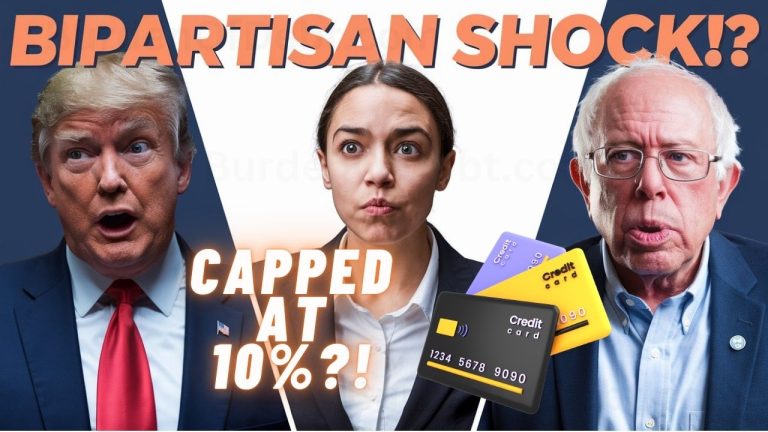
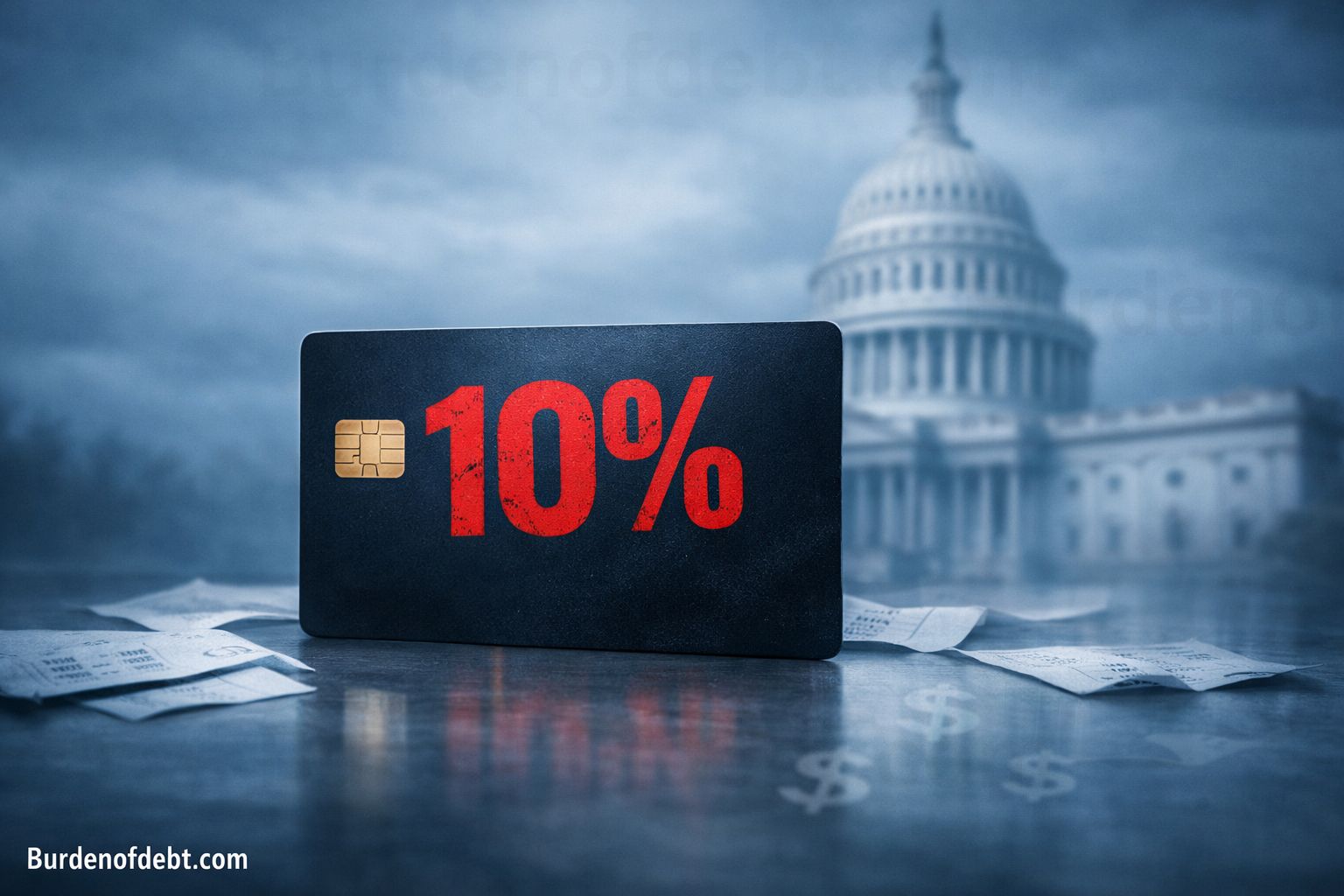
That is why President Trump’s proposal to cap credit card interest rates at 10% generated so much attention. It was one of his most talked-about campaign promises, and it appealed to voters across the political spectrum. The idea is simple: no credit card company should be allowed to charge more than 10% annual interest. If enacted, supporters say it could save American consumers roughly $100 billion per year.
But as of February 2026, the cap has not become law. The legislation is stalled, the banking industry is pushing back hard, and the administration has been forced to pivot. Here is where things stand and, more importantly, what it means for your wallet.
How We Got Here
The Campaign Promise
During the 2024 presidential campaign, Trump repeatedly called for a 10% cap on credit card interest rates. The proposal carried a strong populist appeal. Whether you lean left or right, the idea that banks should not be charging 25% or more on credit cards while the federal funds rate sits far lower resonates with a wide audience. Trump initially signaled the cap would take effect on January 20, 2026, either through executive action or through voluntary compliance from the banking industry.
The Davos Speech and the Shift to Congress
At the World Economic Forum in Davos, Trump took a different approach. Rather than pressing forward with executive action, he urged Congress to pass a one-year cap on credit card rates at 10%. This was a significant shift. It acknowledged a legal reality that many policy experts had already pointed out: the president does not have the unilateral authority to impose interest rate caps. That power rests with Congress.
The Legislation: S.381
The centerpiece of the legislative effort is the 10 Percent Credit Card Interest Rate Cap Act, designated as S.381. It was introduced in February 2025 by an unusual bipartisan pairing: Senator Bernie Sanders, the progressive independent from Vermont, and Senator Josh Hawley, the conservative Republican from Missouri. The bill proposes a temporary cap on credit card interest rates at 10%, lasting until 2031. That bipartisan sponsorship gave the bill early credibility, but credibility and momentum are two different things.
Where Things Stand Right Now
Stalled in Committee
As of this writing, S.381 remains stuck in the Senate Banking Committee. There have been no hearings, no markups, and no scheduled votes. The bill has not advanced a single step through the legislative process since it was introduced a year ago.
In early February 2026, a coalition of more than 55 consumer advocacy organizations sent a joint letter urging the Senate and House committees to move forward with the bill. The letter cited the staggering scale of the problem: U.S. credit card debt has surpassed $1.2 trillion. Despite that pressure, there has been no visible response from committee leadership.

The “Trump Card” Idea
Facing the reality that legislation was not moving, Trump administration officials floated an alternative concept: voluntary “Trump Cards.” The idea was that major banks would voluntarily issue a new credit card product carrying a 10% interest rate for one year, essentially branding it as a Trump-endorsed product.
On paper, it was a creative workaround. In practice, it has gone nowhere. No major credit card issuer or bank has committed to offering such a product. The reasons are straightforward. Credit card interest income is one of the most profitable revenue streams in banking. Asking banks to voluntarily slash their rates is like asking them to voluntarily cut their earnings, and no CEO wants to explain that decision to shareholders.
The Legal Reality
Legal experts have been consistent on this point: the president cannot cap credit card interest rates through executive order. A detailed analysis from NOLO walks through the legal landscape. Congress holds the authority to regulate interest rates, and without a bill passing both chambers and being signed into law, there is no mechanism to enforce a cap. Critics from both parties have noted this limitation.
The Debate: Arguments For and Against
The Case for the Cap
Supporters of the rate cap make a compelling case grounded in consumer economics. With credit card debt exceeding $1.2 trillion, tens of millions of Americans are paying interest rates that make it nearly impossible to pay down their balances. As Senator Sanders wrote in a widely shared op-ed, the current rate environment amounts to a massive transfer of wealth from working families to Wall Street.
The math illustrates the point clearly. Consider two scenarios for a consumer carrying a $5,000 credit card balance:
| At 24% APR (Current Avg.) | At 10% APR (Proposed Cap) | |
|---|---|---|
| Balance | $5,000 | $5,000 |
| Annual Interest | ~$1,200 | ~$500 |
| Your Savings | ~$700 per year |
Multiply that across millions of households, and the aggregate savings are enormous. Consumer advocacy groups estimate the cap could redirect approximately $100 billion per year from bank coffers back into the pockets of American families.
The Case Against the Cap
The opposition is equally vocal and comes primarily from the banking industry, airline loyalty programs, and business trade groups. Their arguments center on several key concerns.
Reduced access to credit. Banks price interest rates based on risk. If they cannot charge higher rates to riskier borrowers, they argue they will simply stop lending to them. This could leave millions of consumers, particularly those with lower credit scores, without access to credit cards at all.
The death of rewards programs. Credit card rewards, including cash back, airline miles, and travel points, are funded in part by the interest revenue that banks earn. A rate cap could significantly reduce that revenue, and banks warn that popular rewards programs would be scaled back or eliminated. A top airline industry lobbyist told Reuters that the cap could harm co-branded credit card programs that generate billions in revenue for carriers.
The payday loan trap. Perhaps the most sobering argument is that consumers shut out of the credit card market would turn to far worse alternatives. Payday loans, title loans, and other predatory lending products carry effective annual rates that can exceed 400%. Critics argue the cap could push vulnerable borrowers from a bad situation into a catastrophic one.
Broader economic concerns. The U.S. Chamber of Commerce has warned that rate caps could hurt small businesses that depend on credit card financing for cash flow and inventory. Others worry about a broader chilling effect on consumer spending, which accounts for roughly two-thirds of U.S. GDP.
What This Means for You Right Now
Here is the honest bottom line: do not wait for Congress to rescue you from high interest rates. The legislation is stalled. There is no clear path forward. Even if momentum somehow builds, passing a bill through both chambers of Congress and getting it signed into law takes time, and there is strong industry opposition working against it every step of the way.
The good news is that you do not have to wait. There are concrete steps you can take today to reduce what you are paying in credit card interest.
Look into balance transfer cards. Many credit card issuers offer balance transfer cards with 0% introductory APR periods lasting anywhere from 12 to 21 months. Transferring a high-interest balance to one of these cards can give you a significant window to pay down your debt without interest accumulating. Be aware of balance transfer fees, which typically run 3% to 5% of the transferred amount, and make sure you have a plan to pay off the balance before the promotional period ends.
Call your card issuer and negotiate. This is one of the most underused strategies available to consumers. If you have a solid payment history, call your credit card company and ask for a lower APR. Many issuers have retention departments with the authority to reduce rates for customers who ask. You will not always get a yes, but you will never get one if you do not ask.
Consider a debt consolidation loan. Personal loans from banks, credit unions, or online lenders often carry interest rates significantly lower than credit cards, especially if you have fair to good credit. Consolidating multiple high-rate card balances into a single loan with a fixed rate and a set payoff timeline can simplify your finances and save you real money.
Use a repayment strategy that works for you. Two of the most popular approaches are the avalanche method and the snowball method. With the avalanche method, you focus extra payments on your highest-interest debt first, which saves the most money over time. With the snowball method, you pay off your smallest balances first, building momentum and motivation. Both work. Choose the one that fits your personality and financial situation.
Seek help from a nonprofit credit counselor. If your debt feels overwhelming, a nonprofit credit counseling agency can help you develop a debt management plan. These organizations, such as those affiliated with the National Foundation for Credit Counseling (NFCC), can often negotiate lower interest rates with your creditors and consolidate your payments into one monthly amount. These services are typically free or very low-cost.

What to Watch Going Forward
While the 10% rate cap is not moving right now, the story is not necessarily over. There are several developments worth watching.
Senate Banking Committee activity. Any sign that the committee is scheduling hearings or markups on S.381 would indicate the bill is gaining traction. As midterm election season approaches, there may be political pressure on members to take visible action on a proposal that polls well with voters across the aisle.
Alternative legislation. Even if the 10% cap does not move forward in its current form, there is always the possibility that alternative proposals could emerge. These might include a higher cap (say 15% or 18%), phased implementation, or targeted relief for specific groups of borrowers such as military families or low-income consumers.
State-level action. Some states may attempt to impose their own rate regulations. While federal preemption complicates the picture for nationally chartered banks, state-level efforts can sometimes build momentum for federal action and create important consumer protections for residents of those states.
The CFPB’s role. The direction of the Consumer Financial Protection Bureau under this administration will be worth monitoring. While the CFPB does not have the authority to impose rate caps, it does have oversight and enforcement tools that affect how credit card companies operate, including rules around billing practices, fee disclosures, and rate change notifications.
Industry moves. If even one major issuer were to break ranks and offer a genuinely low-rate credit card product, it could create competitive pressure across the industry. While the voluntary “Trump Card” idea has not taken hold, market dynamics can sometimes accomplish what legislation cannot.
The Bottom Line
President Trump’s proposal to cap credit card interest rates at 10% tapped into a real and widespread frustration. American consumers are paying record amounts of interest on record levels of credit card debt, and the idea that there should be a limit on what banks can charge has broad, bipartisan appeal.
But the reality is that the legislation is stalled, the administration’s voluntary alternative has not gained traction, and the banking industry is mounting strong opposition. Relief through Washington is uncertain, and it is almost certainly not coming soon.
That does not mean you are stuck. The tools to fight back against high interest rates exist today: balance transfer offers, negotiation, consolidation, structured repayment plans, and professional credit counseling. You do not need an act of Congress to start making progress on your debt.
We will continue to track this story as it develops. In the meantime, explore the resources available here on Burdenofdebt.com to take control of your credit card debt today.
Sources and Further Reading
- 10 Percent Credit Card Interest Rate Cap Act (S.381) – Congress.gov
- Coalition Letter Urging Action on the Rate Cap – Protect Borrowers
- Trump Calls on Congress to Enact 10% APR Cap – America’s Credit Unions
- Op-Ed: We Need to Cap Credit Card Interest Rates at 10% – Sen. Sanders
- Top U.S. Airline Lobbyist Warns on Rate Cap Impact – Reuters
- Can the President Legally Cap Credit Card Rates? – NOLO
- Trump and Congress on the 10% Credit Card Rate Cap – CNBC
- Trump’s Credit Card Interest Rate Cap and the Economy – City Journal
© 2026 by Burdenofdebt.com, All rights reserved. No part of this document may be reproduced or transmitted in any form or by any means, electronic, mechanical, photocopying, recording, or otherwise, without prior written permission.